
The Control Panel of Your DNA: How Your Lifestyle Rewrites Your Health
Your DNA is the permanent hardware, but epigenetics provides the software bookmarks. Discover how daily habits can activate tumor suppressor genes and rewrite your health blueprint.
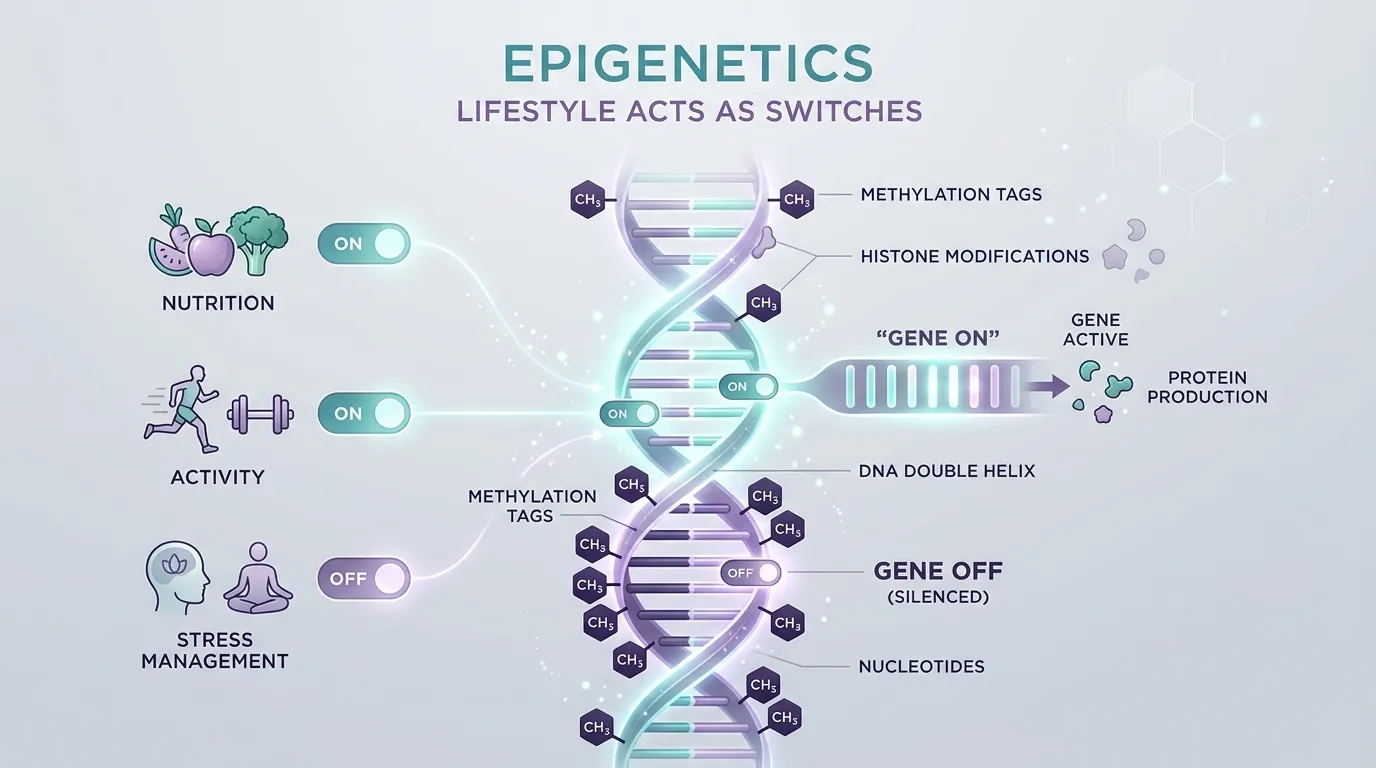
Imagine your body is an operating system. Your DNA—the genetic code you were born with—is the permanent hardware. For decades, we believed our health fate was written entirely in these genes. If you inherited a risk for a disease, it felt like an inevitable destiny. Enter epigenetics. Derived from the Greek word epi, meaning "above" or "in addition to," epigenetics is the study of how behaviors and environment cause changes that affect the way your genes work. Unlike genetic mutations, epigenetic changes do not alter your underlying DNA sequence; instead, they change how your body reads that sequence. Think of your DNA as a massive library of books. Epigenetics acts as the bookmarks, highlighters, and sticky notes that dictate which books get read and which remain closed on the shelf.
How Lifestyle Choices Turn Genes On and Off
Your epigenetic bookmarks are constantly being rewritten by the cellular environment you cultivate. Chemical tags—such as methyl groups—attach to DNA in response to daily habits, acting like light switches that turn gene expression up or down:
- Nutrition: Nutrients like folate, vitamin B12, sulforaphane, and polyphenols provide essential methyl donors and cofactors required for healthy biological gene tagging.
- Physical Activity: Regular movement signals muscle and endothelial tissues to switch on metabolic and anti-inflammatory genetic pathways.
- Stress and Sleep: Chronic emotional stress and sleep deprivation trigger cortisol floods that silence immune-regulating genes and accelerate cellular senescence.
- Environmental Toxins: Exposure to tobacco smoke, heavy metals, and endocrine disruptors can disrupt protective epigenetic marks, silencing cellular repair mechanisms.
Epigenetics, Cancer, and Tumor Suppressor Genes
This delicate control panel plays a vital role in cancer defense: Every human cell contains tumor suppressor genes—the body's natural defense force designed to fix damaged DNA, regulate cell division, and trigger programmed cell death (apoptosis) if a cell becomes abnormal. In health, these protective genes are active. However, cancer cells frequently place chemical "off-switches" (hypermethylation) on tumor suppressor genes, silencing them and allowing abnormal cells to proliferate. The groundbreaking insight of modern medicine is that epigenetic modifications are reversible.
- Re-activate Tumor Suppressor Genes: Bioactive nutrients (like sulforaphane in cruciferous vegetables and EGCG in green tea) along with regular exercise help remove obstructive methyl groups, turning natural defenses back on.
- Support Conventional Therapies: A favorable epigenetic microenvironment strengthens cellular resilience, reducing chronic inflammation and enhancing responsiveness to standard oncology protocols.
Taking Control of Your Genetic Future
Your genes are a blueprint, not an immutable destiny. While you cannot alter the underlying DNA sequence you inherited, your daily choices directly influence how that blueprint is read and expressed. By nourishing your body, staying active, and reducing toxic burdens, you actively program your cellular environment to defend, repair, and thrive.
Dr. Sujata Mittal, Senior Gynaecologic Oncologist & Preventive Care Specialist, Famicare Speciality Centre, Rohini
Frequently Asked Questions
What is the difference between genetics and epigenetics?
Genetics refers to the fixed DNA sequence you inherit, like the letters in a book. Epigenetics refers to chemical tags that determine which chapters get read or skipped, without changing the letters.
Can lifestyle changes reverse epigenetic damage?
Yes. Unlike permanent DNA mutations, epigenetic tags are dynamic and reversible. Adopting a nutrient-dense diet, routine exercise, and stress reduction can re-activate dormant tumor suppressor genes.
Take charge of your cellular health with personalized preventive oncology care. Consult Dr. Sujata Mittal at Famicare.
Keep reading
View all → Regenerative Medicine
Beyond Waste: The Untapped Regenerative Power of Menstrual Blood
What was once dismissed as waste is now proving to be one of the richest, most ethical, and most accessible sources of regenerative medicine available: Menstrual Stem Cells (MenSCs).
 Cancer Awareness
Plastics, Pesticides, Processed Food and Deodorants: What Really Raises Breast Cancer Risk?
Social media is full of alarming warnings about chemicals and food. The honest picture has three layers: risks with reasonable evidence, concerns that are plausible but unproven, and popular myths.
 Cancer Screening
Thermography and Other Non-Invasive Breast Tests: Do They Work?
Many women hope for a painless, radiation-free test that can replace the mammogram. Here is what the evidence says.