
Demystifying Cancer Jargon: A Plain-English Guide to 8 Essential Terms
Hearing words like angiogenesis, apoptosis, or HER2 can feel overwhelming. Here is an empowering translation of eight essential oncology terms using simple everyday analogies.
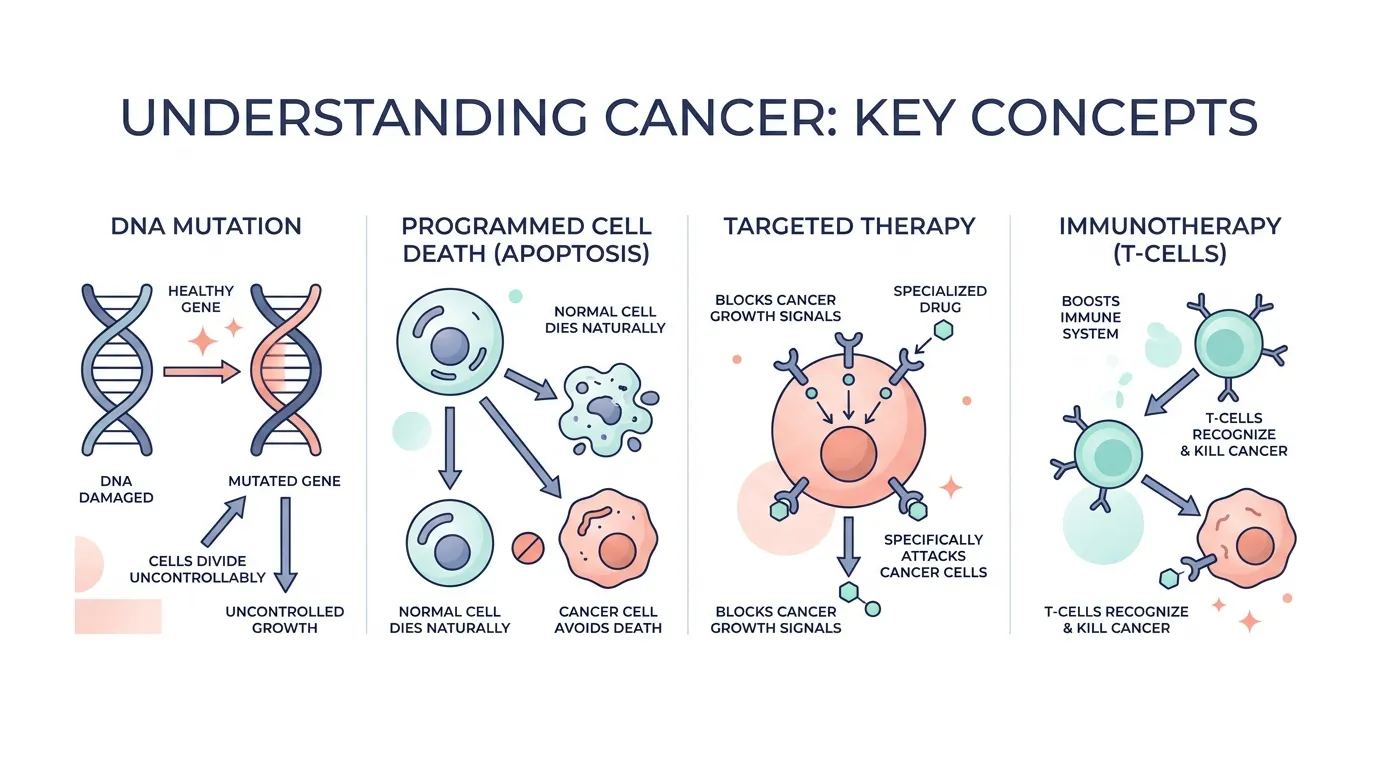
Hearing words like angiogenesis, apoptosis, or HER2 can feel like someone is speaking a completely foreign language—especially when you or a loved one is already dealing with the stress of a cancer diagnosis. Medical terminology is dense, but breaking it down can make a world of difference. When you understand the vocabulary, doctor appointments feel a little less intimidating, treatment plans start to make sense, and you feel more empowered to take control of your health journey. Let’s translate eight common oncology terms into plain language using everyday analogies!
The 8 Essential Oncology Terms Explained
Clear explanations using simple real-world comparisons:
- 1. Mutation (The Typo): Imagine your DNA is a massive recipe book. Every time a cell divides, it copies the book. A mutation is simply a typo in that copy. If a typo lands on a page controlling cell division, it can cause cells to multiply out of control.
- 2. Angiogenesis (The Private Supply Line): Once tumors start growing, they need oxygen and nutrients. Angiogenesis is the process where a tumor tricks your body into building brand-new blood vessels directly to it to fuel its expansion.
- 3. Apoptosis (The Built-in Self-Destruct Button): Healthy cells have a brilliant quality-control system: when damaged, they peacefully self-destruct. Cancer cells disable this self-destruct button, surviving way past their expiration date.
- 4. Immunotherapy (The Security Guard Training Program): While chemotherapy acts like a carpet bomb, immunotherapy trains your own immune system to spot rogue cancer cells that were previously hiding in plain sight.
- 5. Molecular Targeted Therapies (The Sniper Rifle): Instead of attacking all rapidly dividing cells, targeted drugs hone in on specific genetic mutations or unique proteins present only on cancer cells, sparing healthy tissue.
- 6. BRCA 1 and BRCA 2 (The Cellular Mechanics): Everyone has BRCA genes! Their normal job is to repair damaged DNA. If a person inherits a harmful mutation, the repair shop is closed, significantly raising lifetime breast and ovarian cancer risks.
- 7. HER2/neu (The Stuck Gas Pedal): HER2 is a protein receptor that acts like an accelerator on cell surfaces. In HER2-positive cancers, having too many receptors locks the gas pedal down, signaling cells to divide aggressively.
- 8. Remission (The Disappearing Act): Complete remission means tests, scans, and exams show that all signs of cancer have disappeared. While not identical to a guaranteed cure, it indicates the disease is undetectable and dormant.
Dr. Sujata Mittal, Senior Gynaecologic Oncologist, Famicare Speciality Centre, Rohini, New Delhi
Frequently Asked Questions
What is the difference between chemotherapy and targeted therapy?
Chemotherapy attacks all rapidly dividing cells in the body (including hair and gut lining), while targeted therapy specifically attacks distinct molecular features found only on cancer cells.
Does having a BRCA mutation mean I will definitely get cancer?
No. A BRCA mutation elevates the statistical lifetime risk, but it does not guarantee cancer. Proactive surveillance, screening, and preventive strategies significantly reduce risks.
Need clarity on a diagnosis or treatment plan? Schedule a second opinion with Dr. Sujata Mittal at Famicare.
Keep reading
View all → Preventive Oncology
The Control Panel of Your DNA: How Your Lifestyle Rewrites Your Health
Your DNA is the permanent hardware, but epigenetics provides the software bookmarks. Discover how daily habits can activate tumor suppressor genes and rewrite your health blueprint.
 Regenerative Medicine
Beyond Waste: The Untapped Regenerative Power of Menstrual Blood
What was once dismissed as waste is now proving to be one of the richest, most ethical, and most accessible sources of regenerative medicine available: Menstrual Stem Cells (MenSCs).
 Cancer Awareness
Plastics, Pesticides, Processed Food and Deodorants: What Really Raises Breast Cancer Risk?
Social media is full of alarming warnings about chemicals and food. The honest picture has three layers: risks with reasonable evidence, concerns that are plausible but unproven, and popular myths.