
Karnataka's Maternal Mortality Data Is a Warning We Can't Afford to Ignore
An interim government audit tabled in Karnataka this April revealed something every obstetrician and surgeon already suspects but rarely sees quantified so starkly: most maternal d…
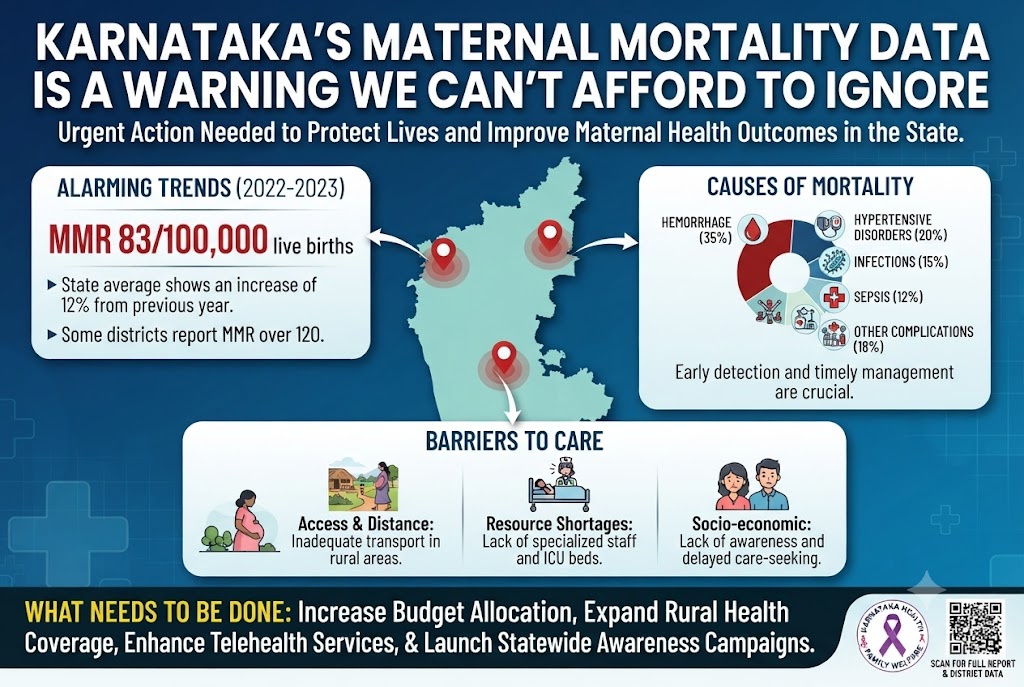
An interim government audit tabled in Karnataka this April revealed something every obstetrician and surgeon already suspects but rarely sees quantified so starkly: most maternal deaths are preventable. Of the 464 maternal deaths recorded across the state between April and December 2024, over 70% fell into that category — deaths that, with timely intervention, should not have happened. (Source: The News Minute, based on the state health department's audit.)
Bengaluru Urban recorded the highest toll at 71 deaths, followed by Ballari, Dharwad, Kalaburagi, and Belagavi — a spread that includes both metro and rural districts, suggesting this isn't purely an access-to-hospitals problem. It's also a protocol and preparedness problem. The clinical breakdown is where this data becomes actionable for practitioners:
- Nearly 69% of the women who died had high-risk pregnancies — meaning risk was often identifiable in advance.
- Hypertensive disorders accounted for a third of deaths.
- Haemorrhage was the cause in over a quarter of cases.
- Sepsis, cardiac complications, infections, and pulmonary embolism made up the remainder.
Why haemorrhage numbers should worry every labour ward
Postpartum haemorrhage (PPH) remains one of the most survivable causes of maternal death if the response is fast and standardized — and one of the most fatal when it isn't. This is exactly why structured PPH-response training (BIILA training) shouldn't be optional CME for obstetricians and surgeons — it should be treated as a non-negotiable, recurring drill, the same way emergency departments drill cardiac arrest response. The uncomfortable truth in this audit is that a large share of these deaths weren't caused by an absence of medical knowledge — they were caused by delays: in recognizing risk, in escalating care, in executing the response once haemorrhage began.
What this means going forward
Reports like this only translate into fewer deaths if they change behavior in labour rooms and OTs — through standardized haemorrhage protocols, high-risk pregnancy flagging systems, and mandatory hands-on training, not just annual policy reviews. 📍 Famicare Speciality Center, opp M2K, Rohini, Delhi 📞 Call/WhatsApp: +91 96253 61613 🌐 www.famicarespeciality.com 📧 famicarespeciality08@gmail.com
connect with us today!
Keep reading
View all → Colposcopy training programme
✨ Practical Colposcopy Training with Hands-On Practical Sessions ✨
 Preventive Oncology
Best Colposcopy in North West Delhi & Rohini: Expert Care at Famicare Speciality Centre
Comprehensive guide to Colposcopy in Rohini & North West Delhi. Learn why expert evaluation is crucial for cervical health and preventive oncology led by Dr. Sujata Mittal.
MASS HYSTERECTOMIES: SLEEPING GOVERNMENT
An investigation first published by India's Business Line in April 2019 exposed HYSTERTOMY TREND in Beed district, Maharashtra: thousands of poor women working as sugarcane cutters…