
No Denominator, No Disclosure, No Consent
India’s HPV vaccination programme raises an important public-health question: not whether the vaccine can prevent cervical cancer, but whether its rollout is supported by transpare…
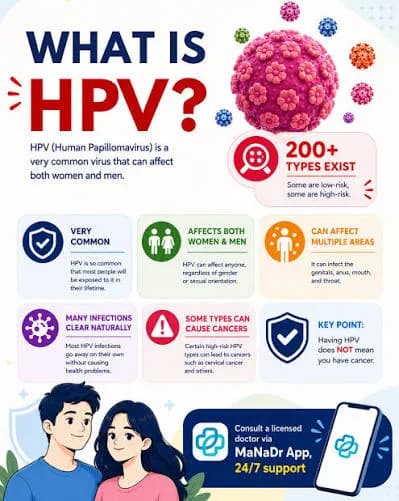
India’s HPV vaccination programme raises an important public-health question: not whether the vaccine can prevent cervical cancer, but whether its rollout is supported by transparent, independently verified safety monitoring. As millions of children are targeted for vaccination, gaps in disclosure, consent, and follow-up demand urgent scrutiny.
Why India's Universal HPV Vaccination Programme Has Outrun Its Own Safety Evidence

The claim in one sentence India has begun vaccinating adolescent girls at national scale against human papillomavirus without a publicly auditable adverse-event dataset, without a single published Indian AEFI analysis for the vaccine, and without an independent field investigation of any kind since 2010 — and until those three deficits are corrected, the programme cannot satisfy the standard of informed consent that Article 21 requires. It is an argument that India does not currently possess the evidence to say either way about its own population, and that a state which does not know cannot lawfully claim to have informed anyone.
1. What scrutiny used to look like
Between 2009 and 2013, India's HPV vaccination effort was subjected to genuine adversarial examination. The PATH-ICMR demonstration project in Khammam (Andhra Pradesh) and Vadodara (Gujarat) enrolled over twenty thousand adolescent girls. When deaths and adverse events were reported, the response was investigation from several independent directions at once:
- Field enquiry by civil-society organisations, most notably SAMA's Bhadrachalam investigation, which documented consent failures, hostel-based recruitment, and absent follow-up;
- • A Government of India enquiry committee;
- • The 72nd Report of the Parliamentary Standing Committee on Health and Family Welfare (2013), which examined the regulatory file itself and found the project's ethical and consent architecture wanting.
- Whatever one concludes about the merits of that episode, the process was functional. Independent actors could obtain primary material, interrogate it, and publish. Parliament could compel disclosure. The programme was paused while questions were answered.
What scrutiny looks like now

State HPV programmes ran in Punjab and Sikkim from 2016, and later in Delhi. In February 2026 the vaccine entered the Universal Immunisation Programme, with a nationwide campaign targeting approximately 11.5 million girls in its first year using a single-dose quadrivalent schedule. Against this expansion, consider what does not exist: Accountability mechanism 2009–2013 2016–2026 Independent NGO field investigation Yes (SAMA and others) None CAG performance audit specific to HPV — None Parliamentary committee examination Yes (72nd Report) None Published AEFI dataset or analysis Contested but examinable None published Causality-assessment records in public domain Partial Not released The state programmes were evaluated — but almost exclusively through government and government-affiliated academic implementation studies measuring coverage, acceptability, drop-out and cost. These are studies of uptake, not of harm. A programme can be perfectly implemented and still injure people, and coverage metrics are structurally incapable of detecting that.
3. The number that proves the point
In response to litigation, ICMR has told the court that 120 adverse events have been reported following HPV vaccination, of which 80 were minor and 40 major. Take that figure seriously for a moment, because it is more revealing than it is reassuring. The number is implausibly small on its face — and that is the alarm, not the comfort. It indicates an exceptionally quiet reporting system — which is precisely what passive surveillance in India is known to produce. Fourth, "minor" and "major" are not the categories that matter. India's AEFI system classifies events as serious, severe or minor, and then separately assesses causality against WHO criteria into consistent, indeterminate, inconsistent, or unclassifiable. The submission collapses this. The public has been given a verdict without the reasoning, the line-list, the case definitions, or the composition of the committee that reached it.
4. Signals that surfaced anyway — and where they surfaced

The most instructive evidence is not what surveillance found, but what surveillance missed and someone else published. The international pattern. A CDC-WHO study of cluster anxiety-related AEFI found that HPV vaccine was the single most commonly implicated vaccine, at 48.7% of reports, and that eighteen cluster events identified through open-source search had never reached the peer-reviewed literature at all — against only eight such clusters found in eighteen years of published medical literature. The authors' own conclusion was that relying on traditional peer-reviewed sources "may seriously underestimate" these events. Five vaccination campaigns in four countries were halted by such clusters. Cluster events after school-based HPV vaccination are a well-recognised, internationally documented phenomenon. They are under-captured everywhere. India has now begun the largest school-based HPV campaign in the world, and has released no mechanism by which such clusters will be detected, investigated with adequate diagnostics, publicly reported, or counted.
5. Two precedents India should have learnt from
Polio. In 2012, Vashisht and Puliyel reported in the Indian Journal of Medical Ethics that non-polio acute flaccid paralysis in India had risen to roughly twelve times the expected international rate, reaching 25- and 35-fold above international norms in Uttar Pradesh and Bihar respectively — the states receiving near-monthly pulse rounds. They calculated approximately 47,500 excess NPAFP cases nationally in 2011 alone, and reported a dose-response relationship with cumulative OPV doses over the preceding three years. Follow-up data from Uttar Pradesh had shown 35.2% residual paralysis and 8.5% mortality at 60 days. The causal interpretation of that analysis was and remains contested; much of the rise has been attributed by others to intensified surveillance and broadened case ascertainment. That dispute does not touch the governance point. The data were generated inside the state's own surveillance system, the excess was visible, and no open, published investigation of the signal was undertaken. A surveillance system that generates an anomaly and does not interrogate it is not a safety system. It is a compliance ritual. COVID-19. In Jacob Puliyel v. Union of India (2022), the Union told the Supreme Court that vaccination was voluntary. The Court proceeded on that representation — while simultaneously recording that mandates imposed by states and employers, conditioning access to work, travel and public services on vaccination status, could not be sustained as proportionate. The gap between what was asserted at the bar and what citizens experienced at the vaccination centre is the precise gap now reopening. The Court in that case also directed that segregated clinical trial data be published and that AEFI reporting be made accessible and improved. Those directions were general in their logic and have not been honoured in the HPV context. The pattern across polio, COVID-19 and now HPV is consistent: assurance is offered in place of data, voluntariness is asserted in principle and eroded in practice, and the surveillance system is invoked as evidence of safety while its outputs are withheld from the people whose safety is at issue.
6. Why global data cannot substitute for Indian data

The standard reply is that HPV vaccines have been studied in tens of millions of girls worldwide and found safe. Three problems. The efficacy evidence itself does not yet reach the endpoint that matters. The four registry cohorts most frequently cited — Lei (Sweden, 2020), Kjaer (Denmark, 2021), Palmer (Scotland, 2024) and Middeldorp (Netherlands, 2025) — followed women to maximum ages of approximately 31, 30, 25 and 31 years respectively. Peak cervical cancer incidence is 45–59. These studies therefore capture essentially none of the peak-risk period. Lei rests on 19 cancer events among the vaccinated. All four are observational with self-selected vaccinated groups; Swedish data from the same group show vaccinated women attending screening at 74% versus 69% — healthy-vaccinee bias operating in the direction of the finding. None assessed non-vaccine HPV type replacement. Safety findings are not automatically portable. Nutritional status, autoimmune background rates, co-administered vaccines, ambient infection burden, and — critically — the delivery setting differ. Anxiety-related cluster events are a function of how vaccination is delivered: crowded school sessions, observed peers, absent anticipatory guidance. Indian delivery conditions are not Danish delivery conditions. Circumstantial gaps compound. India's national programme runs on a single-dose quadrivalent schedule; the Indian-made vaccine was licensed on immunobridging with post-marketing surveillance stipulated as a condition. If post-marketing surveillance is the condition on which approval rests, then post-marketing surveillance data are not optional supplementary information. They are the regulatory basis of the licence, and their non-publication is a live regulatory failure, not merely a transparency preference.
7. What must exist before, not after

- 1. Publication of the full AEFI line-list for HPV vaccination — every state, every year from 2016, de-identified: age, dose number, batch, session site, symptom onset interval, investigations performed, hospitalisation, outcome, and the causality classification with its reasoning.
- 2. A stated denominator. Doses administered by state and year, so that a rate can be calculated and compared against expected background incidence.
- 3. Active surveillance, not passive reporting, for the first two years of the national campaign. Cohort event monitoring with structured day-1, day-3, day-7 and day-28 follow-up in a defined sentinel sample — the model used in Uganda's nOPV2 rollout, whose data contributed to WHO prequalification. Passive reporting demonstrably yields 120 events for a national programme; that is a measurement failure, not a safety finding.
- 4. A minimum investigation protocol for cluster events, mandating EEG where transient loss of consciousness occurs, and independent review — so that Banka does not recur as a diagnosis of exclusion reached without the excluding test.
- 5. Independent audit. A CAG performance audit of HPV programme implementation and AEFI handling, and standing terms of reference permitting civil-society field investigation with access to primary records.
- 6. A public-private accountability framework. Where the state procures from private manufacturers and delivers through public infrastructure, the allocation of liability must be explicit and public, with a no-fault compensation scheme, disclosed indemnity terms, and disclosed conflict-of-interest declarations for every member of the advisory bodies that recommended the programme.
- 7. Genuine consent. Written, individual, parental consent with a plain-language statement of known adverse events and of the current limits of Indian data, and an explicit, documented right of refusal without consequence to schooling.
- 8. Anticipating the counter-arguments
- Intellectual honesty requires stating the strongest opposing case.
Cervical cancer kills roughly 77,000 Indian women a year, and delay has a body count. This is true and it is the most serious objection. The response is not that the harm is imaginary but that it is not answered by suspending scrutiny: nothing in the demands above prevents vaccination proceeding for informed, consenting families while surveillance is built. What they prevent is coerced vaccination in the dark. Anxiety-related events are benign and self-limiting. Largely true, and the Banka authors say so themselves. But "benign" is a conclusion, not a premise. It was reached in Banka without an EEG. And even accepting it entirely, benign cluster events halted five national programmes in four countries — the argument for structured surveillance and anticipatory guidance is strengthened, not weakened, by their benignity. Passive AEFI systems under-report everywhere, so India is not exceptional. Correct, and it is why active surveillance is the demand rather than better passive reporting. Under-reporting is an argument for building a better system, never for citing the under-reported total in court as evidence of safety. The global evidence base is enormous. It is. It also has documented limits — follow-up ending fifteen to twenty-eight years before peak cancer incidence, healthy-vaccinee selection, unassessed type replacement — and a state that intends to vaccinate seventy million girls has both the capacity and the obligation to generate its own.
Conclusion The question is not whether the HPV vaccine works. It is whether a state may vaccinate eleven and a half million children in a single year while declining to publish what it knows about what happened to the children it vaccinated before them. Twice in fifteen years, India has generated a safety signal inside its own surveillance system and declined to investigate it openly. Twice, assurances offered to the Supreme Court have substituted for disclosure. The remedy is not suspicion of vaccines. It is the ordinary discipline of public medicine: publish the line-list, state the denominator, monitor actively, audit independently, and obtain consent that deserves the name. India can build this. It has the surveillance infrastructure, the epidemiological capacity, and the manufacturing base. What it has not yet demonstrated is the willingness to be looked at.
Connect with us Now!
Keep reading
View all → Cancer Screening
Which Tests Should a Woman Take? BSE, Mammography, Ultrasound and More
Finding breast cancer early is the most powerful thing a woman can do for herself. Several tests work together, each with its own role.
 Cancer Awareness
Breast Cancer & Liquid Biopsy in Rohini, Delhi
Breast cancer is not always limited to the breast. Cancer cells can spread through the blood and lymphatic system, making systemic treatment essential for reducing the risk of recu…
 Cancer Awareness
Targeted Therapy for Breast Cancer: Latest Treatments
Targeted therapy for breast cancer is a modern treatment approach that focuses on specific proteins, genes, or molecular changes that help cancer cells grow and spread.