
You’re a Laparoscopic Surgeon. But Are You Ready to Open?
A new generation of surgeons is increasingly undertrained in open surgery — and the honest ones will admit it Let me ask something direct. When the bleeding doesn’t stop.
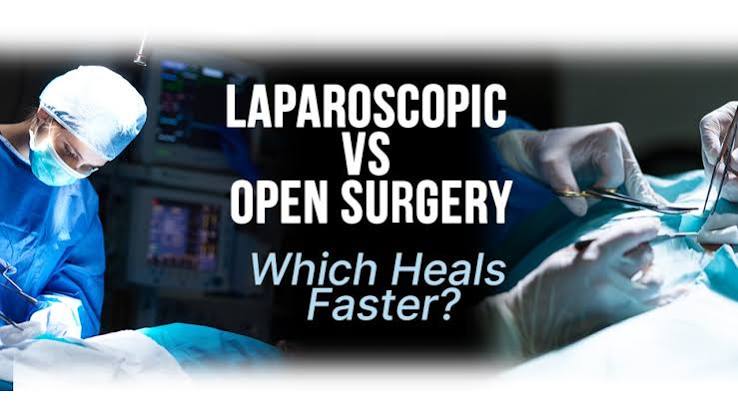
A new generation of surgeons is increasingly undertrained in open surgery — and the honest ones will admit it Let me ask something direct. When the bleeding doesn’t stop. When the anatomy is hostile. When the screen goes dark — are you ready to open? Increasingly, the honest answer among younger surgeons is: not fully.
The Data Is Uncomfortable
Between 2000 and 2018, open surgery case volume among US general surgery residents dropped by roughly 35%, while laparoscopic case volume rose by over 460%. Open appendectomies performed per resident fell from around 31 to under 7 over the same period. Some open procedures have nearly disappeared from standard training entirely. Meanwhile, somewhere between 2% and 15% of laparoscopic cholecystectomies still require intraoperative conversion to open surgery — and converted cases carry higher morbidity, longer hospital stays, and greater mortality risk than cases planned open from the start. The conversion itself isn’t the problem. Being unprepared for it is.
The Skill Gap Is Real — and Increasingly Visible in India Too
Faculty surveys across training programs report the same pattern: residents passing standard certifications while struggling with fundamentals — atraumatic tissue handling, recognizing anatomical planes, independent suturing, or operating unsupervised through a major procedure for even 30 minutes. These aren’t advanced skills. They’re fundamentals — and they’re eroding, largely because most elective cases have shifted to laparoscopic or robotic platforms, leaving fewer opportunities to build and maintain open technique.
Open Surgery Isn’t Optional — It’s the Foundation
Surgical education research is fairly consistent on this point: traditional open training builds the anatomical and tactile foundation that makes the transition to laparoscopic or robotic technique faster and safer. Surgeons grounded in open technique tend to have a shorter learning curve on minimally invasive platforms — not the other way around. Open surgery teaches you where you are inside the body. Every other modality builds on that spatial and tactile foundation.
What Needs to Change
- Open surgical competency should be a mandatory, assessed requirement in residency — not a declining footnote in case logs.
- Sequential mastery matters: open technique first, laparoscopic next, robotic after — not the reverse.
- Conversion to open surgery should be reframed as sound clinical judgment, not failure. Surgeons need to be both technically able and psychologically willing to make that call without hesitation.
- Credentialing bodies need to act. A universal, consensus-based training pathway that balances minimally invasive proficiency with open surgical competency still doesn’t exist across major surgical societies. That gap deserves more attention than it’s getting.
The Bottom Line
A laparoscopic or robotic surgeon who can’t perform open surgery when the situation demands it isn’t a complete surgeon — through no fault of their own, but because of how training has evolved. Emergencies don’t wait for the right platform. The patient on the table deserves a surgeon who can handle whatever the anatomy throws at them, converted plan or not. Open surgery isn’t the past. It’s the prerequisite.
- 📍 Famicare Speciality Center, opp M2K, Rohini, Delhi
- 📞 Call/WhatsApp: +91 96253 61613
- 🌐 www.famicarespeciality.com
- 📧 famicarespeciality08@gmail.com
Connect with us now!
Keep reading
View all → Colposcopy training programme
✨ Practical Colposcopy Training with Hands-On Practical Sessions ✨
 Preventive Oncology
Best Colposcopy in North West Delhi & Rohini: Expert Care at Famicare Speciality Centre
Comprehensive guide to Colposcopy in Rohini & North West Delhi. Learn why expert evaluation is crucial for cervical health and preventive oncology led by Dr. Sujata Mittal.
MASS HYSTERECTOMIES: SLEEPING GOVERNMENT
An investigation first published by India's Business Line in April 2019 exposed HYSTERTOMY TREND in Beed district, Maharashtra: thousands of poor women working as sugarcane cutters…