₹2,500 a Month, and a Needle in Your Daughter's Arm
What Delhi's Lakshmi Yojana SOP tells us about how India still thinks about poor women's consent
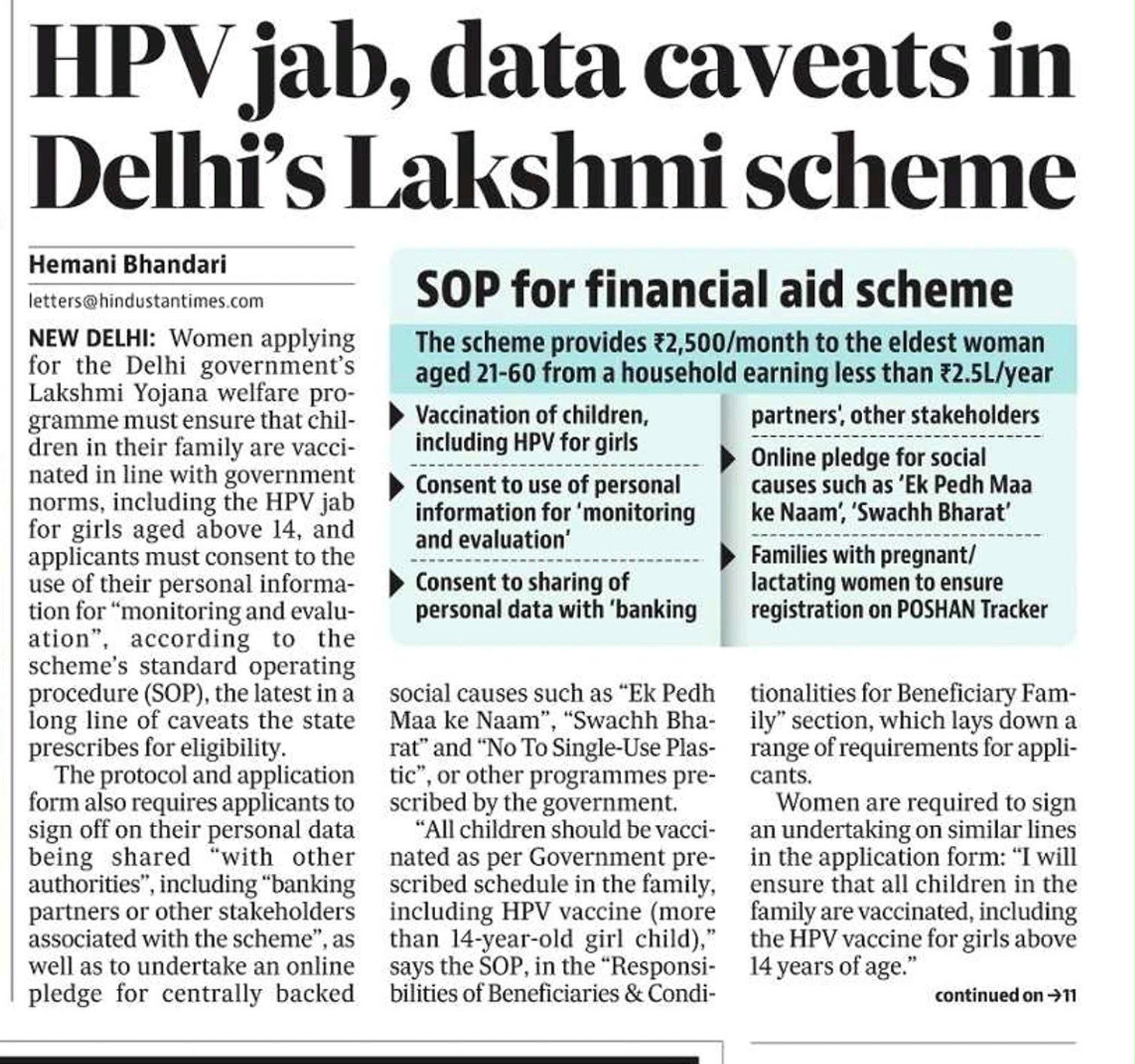
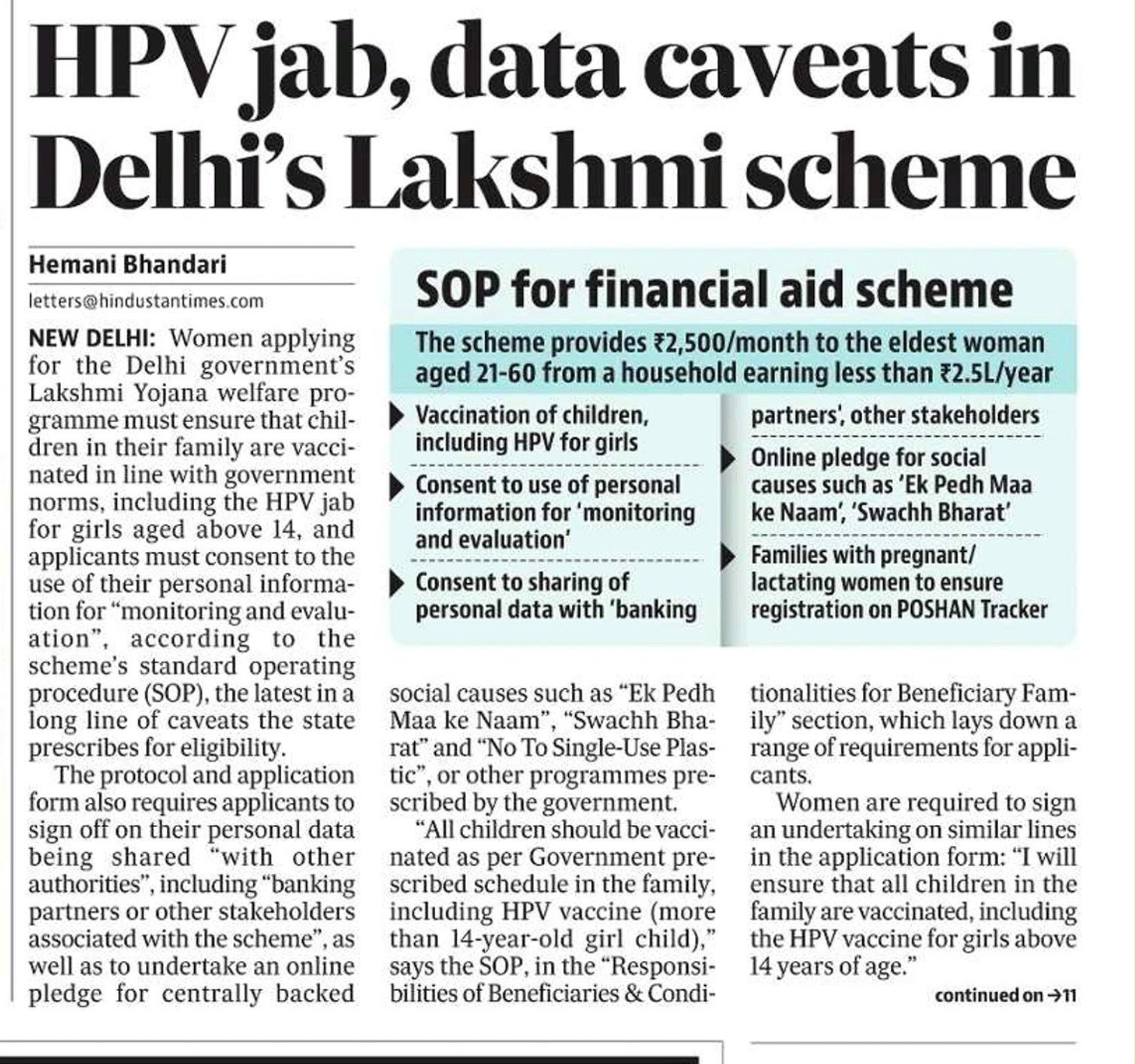
A woman in Delhi earning less than ₹2.5 lakh a year can receive ₹2,500 a month under the Lakshmi Yojana. The scheme's Standard Operating Procedure sets out what she must do to remain eligible. Among the conditions, as reported in the Hindustan Times: "All children should be vaccinated as per Government prescribed schedule in the family, including HPV vaccine (more than 14-year-old girl child)." The application form requires her to sign an undertaking in the same terms. She must also consent to her personal data being shared with "banking partners or other stakeholders," and take an online pledge for assorted government campaigns. Read that carefully. A subsistence transfer to the poorest women in the capital has been made conditional on a specific medical intervention performed on a specific child's body. The constitutional position The relevant authority is not obscure. In Jacob Puliyel v. Union of India (2022), the Supreme Court held that bodily integrity is protected under Article 21, that no individual can be forced to be vaccinated, and that personal autonomy includes the right to refuse medical treatment. Crucially, the Court did not stop at direct compulsion. It applied the three-fold proportionality test from K.S. Puttaswamy — legality, necessity, proportionality — and held that vaccine mandates operating indirectly, by conditioning access to services and entitlements, must satisfy that test or fall. Delhi's SOP is precisely the indirect mandate the Court described. It does not send police to a girl's door. It attaches a price to her refusal, and sets that price at the household's food budget. This engages a further principle familiar to constitutional lawyers as the doctrine of unconstitutional conditions: the State cannot achieve through a condition on a benefit what it is forbidden from compelling directly. If Delhi cannot mandate HPV vaccination of a 15-year-old girl, it cannot make her grandmother's income depend on it. Whose consent, exactly? There is a structural absurdity here that deserves attention. The beneficiary is the eldest woman in the household, aged 21 to 60. The person receiving the injection is a girl over 14. The individual signing the undertaking is not the individual assuming the medical risk. One family member is being paid to procure a medical procedure on the body of another. Informed consent in Indian medical ethics rests on voluntariness. Consent obtained under financial pressure from a household living below ₹2.5 lakh a year is not voluntary — it is what research ethics has long called undue inducement, and ICMR's own National Ethical Guidelines prohibit it in research precisely because money distorts the assessment of risk. That a programme is labelled "service delivery" rather than "research" does not repair the defect; it removes the ethics committee that would have caught it. And where the girl is a minor, we are asking a child to receive a vaccine in circumstances where her refusal costs her family ₹30,000 a year. No adolescent can meaningfully assent under that arrangement. Nor can her mother meaningfully counsel her. The data condition is a second violation Set aside the vaccine for a moment. The SOP also requires consent to share personal information with "banking partners or other stakeholders." Under the Digital Personal Data Protection Act, 2023, consent must be free, specific, informed and unconditional, and must be limited to data necessary for the stated purpose. Consent bundled into an eligibility condition for subsistence income is not free consent by any reading. Where the data concerns children, the Act imposes stricter obligations still. A welfare scheme that harvests vaccination status, household composition and financial data from the poorest women, and shares it with unnamed "stakeholders," is building a compliance register, not delivering a benefit.
We have been here before, with the same girls
In 2009, approximately 23,000 girls aged 10–14 received HPV vaccine in Khammam district, Andhra Pradesh, and Vadodara, Gujarat, in "demonstration projects" run by PATH with ICMR and the two state governments, funded by the Gates Foundation, using vaccines donated by Merck and GSK. Many were tribal girls living in government hostels. Seven died. The projects were suspended in 2010. Let me be precise about those deaths, because precision is what makes the argument survive contact with critics. The Government's enquiry committee attributed the seven deaths to causes other than the vaccine — malaria, snakebite, viral fever, poisoning, unrelated illness. Anyone who claims the vaccine killed seven girls will be answered with that report, and rightly. The scandal was never the causation. It was the consent. The 72nd Report of the Parliamentary Standing Committee on Health and Family Welfare, tabled on 30 August 2013 and endorsed across party lines, found that the project was in substance a clinical trial whatever PATH chose to call it; that consent had been taken from hostel wardens and headmasters rather than parents; that thumb impressions were obtained from illiterate guardians; that ethics oversight and regulatory approval were deficient; and that ICMR and the DCGI had failed in their duties. It found that the countries selected — India, Uganda, Peru, Vietnam — shared a commercial logic alongside a public health one. The population chosen in 2009 was poor, tribal, institutionalised and unable to say no. The population chosen in 2026 is poor, urban, and paid. The instrument has changed. The selection principle has not. What follows from this AEFI reporting will collapse where it is most needed. Consider a mother receiving ₹2,500 a month who has certified that her daughter is vaccinated. Her daughter faints, or develops persistent symptoms. Reporting that event means engaging a system that holds her family's income. She will not report. The scheme therefore does not merely coerce vaccination — it suppresses the safety data that would tell us whether coercion was worth it. Given that ICMR has told the court only 120 HPV adverse events have ever been reported nationally, we are hard-wiring the under-reporting that already makes that figure meaningless. It sets a precedent with no natural limit. If a cash transfer can be conditioned on HPV vaccination, it can be conditioned on sterilisation acceptance, on contraceptive uptake, on any procedure a future government deems desirable. India has a documented history in this territory. We should be slow to reopen it. It will damage the programme it is meant to help. Cervical cancer kills around 80,000 Indian women a year, and I want girls protected. Coercion is the least effective route to durable coverage: it converts a health service into an act of authority, and the resentment it generates outlives the scheme. The 2009 episode set HPV vaccination back in India by more than a decade. This will do it again. And the risk falls where the power does not. Affluent parents in Delhi will make an unhurried, informed choice about their daughters. Women on ₹2,500 a month will not be offered one. The remedy is simple Delete the vaccination condition from the SOP and the undertaking. Delete the bundled data-sharing consent. Issue a written, published assurance that no woman's entitlement will be affected by a decision to refuse or defer any vaccination for any child in her family. Then publish the national HPV AEFI line-list, with denominators, and let families decide on evidence rather than under pressure. Vaccination that a woman cannot refuse is not a public health programme. It is a condition of her poverty.
- Dr Sujata Mittal is a Senior Gynaecologist Oncologist, Preventive Oncologist and Colposcopist with over 35 years in practice.
Connect with us Now!
Keep reading
View all →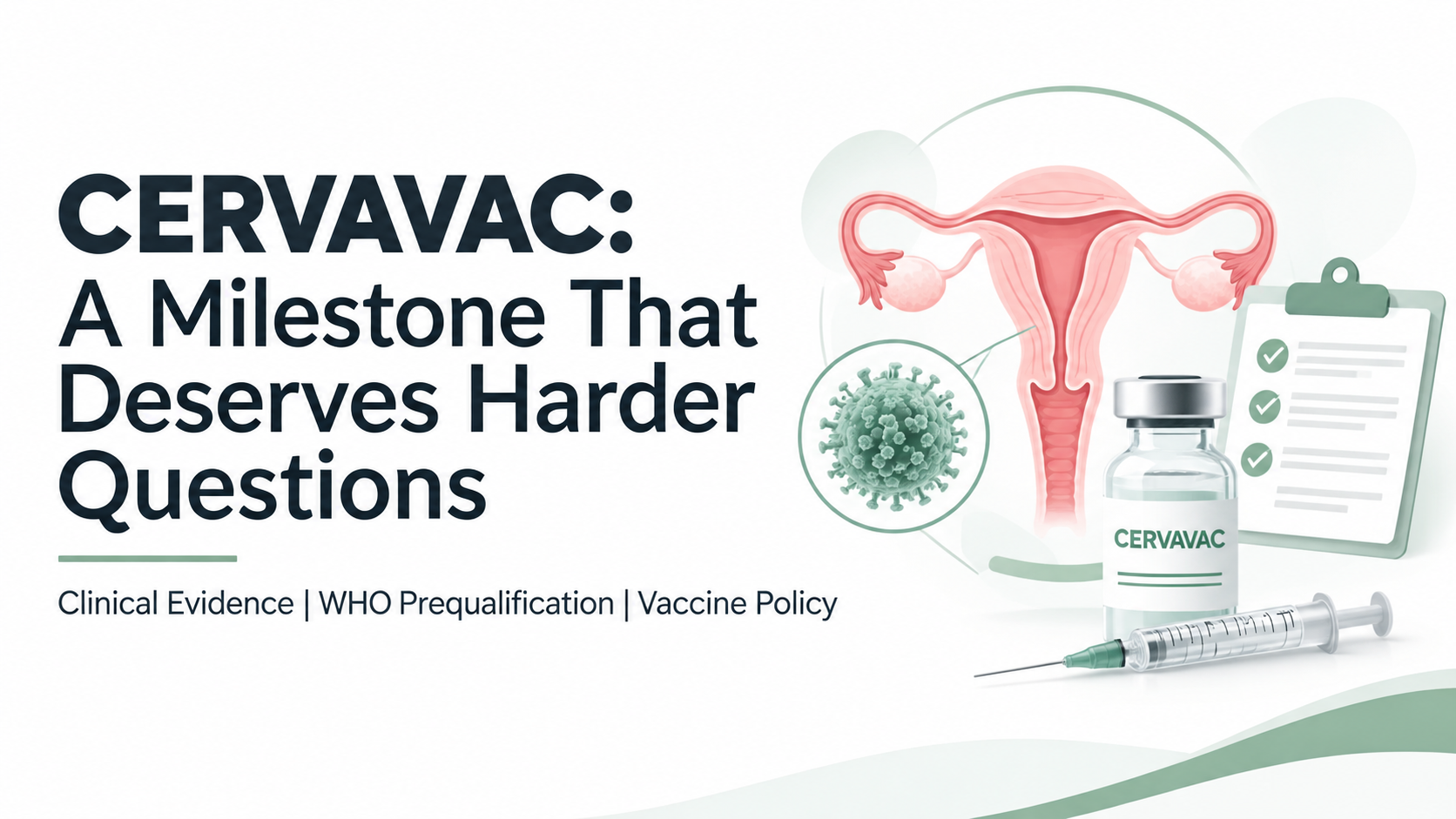 Cancer Awareness
CERVAVAC: Evidence, WHO Prequalification & Vaccine Policy
India’s first indigenous HPV vaccine, CERVAVAC, receiving WHO prequalification marks an important milestone in preventive oncology.
 Cancer Awareness
Breast Cancer & Liquid Biopsy in Rohini, Delhi
Breast cancer is not always limited to the breast. Cancer cells can spread through the blood and lymphatic system, making systemic treatment essential for reducing the risk of recu…
 Cancer Awareness
Targeted Therapy for Breast Cancer: Latest Treatments
Targeted therapy for breast cancer is a modern treatment approach that focuses on specific proteins, genes, or molecular changes that help cancer cells grow and spread.