
Appendiceal Cancer: The Quiet Malignancy Hiding in Plain Sight (Appendiceal Cancer Awareness Month)
Famicare Speciality Center Every August, oncology circles pause to spotlight a cancer most clinicians — including gynaecologists like me — encounter almost by accident: appendiceal…

Famicare Speciality Center Every August, oncology circles pause to spotlight a cancer most clinicians — including gynaecologists like me — encounter almost by accident: appendiceal cancer. It is rare, roughly 1–2 cases per million per year globally, often surfacing only when an "appendicitis" specimen returns from histopathology with an unexpected diagnosis. But rarity is not synonymous with irrelevance, and the trends emerging over the last two years demand our attention.
The trend nobody predicted
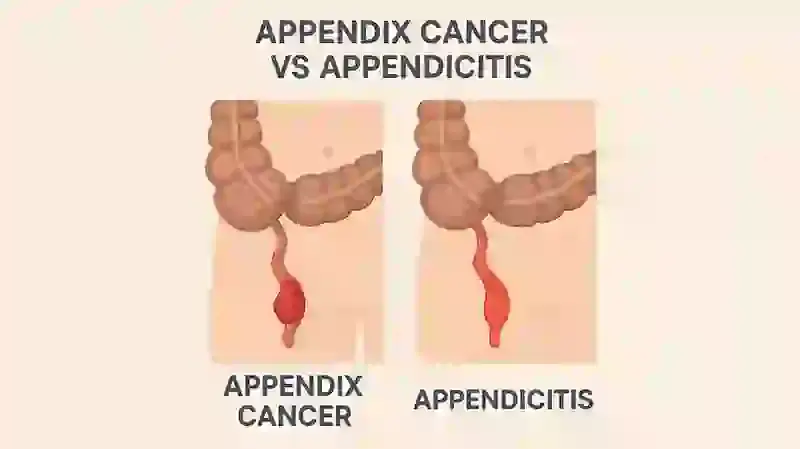
Appendiceal cancer is rising sharply in young adults. Gen X and older Millennials now face three to four times the risk their parents did at the same age, a pattern that mirrors the broader early-onset surge seen in colorectal, gastric, and pancreatic cancers. One particularly striking data point: the incidence of appendiceal neuroendocrine tumours rose nearly 30-fold between 2000 and 2017. Researchers are candid that this cannot be explained by better screening — there is no standardised screening test for appendiceal cancer, and most cases are still incidental findings after a presentation of acute appendicitis. The leading hypothesis points to shared environmental and lifestyle exposures affecting the entire GI tract in younger cohorts: diet, obesity, the microbiome, and possibly early-life exposures we have not yet characterised. As someone who has long argued for scientific humility before declaring any biological process "understood," I find this an important reminder — we are watching a real epidemiological shift with an aetiology we cannot yet fully explain.
Aetiology: still an open question

Unlike cervical or colorectal cancer, appendiceal cancer has no single dominant risk factor we can counsel patients on. There is no equivalent of HPV or smoking. What we do have is a rapidly maturing molecular map. Genomic profiling now separates appendiceal adenocarcinoma into distinct subtypes — a comparatively indolent KRAS-mutant/GNAS-wild-type/TP53-wild-type group, a chemotherapy-resistant GNAS-mutant-dominant group, and an aggressive, highly aneuploid TP53-mutant group. GNAS mutations specifically are linked to better overall survival but poorer response to systemic chemotherapy — a paradox that is reshaping how oncologists sequence treatment. Goblet cell adenocarcinoma, reclassified in the WHO 5th edition away from the old "carcinoid" nomenclature, is now understood as a genuinely adenocarcinomatous entity with its own SMAD4-heavy mutational signature. This granularity matters clinically, not just academically.How it spreads — and why it is so often misread as a gynaecological disease
How it spreads — and why it is so often misread as a gynaecological disease
This is where my own specialty intersects directly with appendiceal cancer, and why I keep returning to this topic. The appendix sits at the ileocaecal junction, but mucinous appendiceal tumours do not spread the way colorectal cancers typically do — via lymphatics and haematogenous routes. Instead, once the appendiceal wall is breached, mucin-producing epithelial cells implant diffusely across peritoneal surfaces, producing pseudomyxoma peritonei (PMP) — "jelly belly." Because the ovaries are a preferred site for these mucinous deposits, PMP frequently first presents as an ovarian mass, and a significant proportion of these patients land on a gynaecologist's operating table before anyone suspects an appendiceal primary. Misclassification is not a rare footnote here; it is a recurring clinical reality, and one every gynaecologist and gynaecologic oncologist should hold in mind whenever a mucinous ovarian tumour looks atypical.
Mainstay of treatment
For localised disease, right hemicolectomy (or, for select low-grade appendiceal mucinous neoplasms, simple appendectomy with clear margins) remains standard. Once peritoneal spread has occurred, the treatment paradigm shifts entirely: cytoreductive surgery (CRS) combined with hyperthermic intraperitoneal chemotherapy (HIPEC) is now the accepted mainstay for PMP and peritoneal-confined appendiceal cancer, performed at high-volume specialist centres. Patient selection increasingly leans on the Peritoneal Cancer Index, histologic subtype, and — new to this decade — molecular status, since KRAS and GNAS profiles are beginning to inform both prognosis and suitability for aggressive cytoreduction. Systemic chemotherapy plays a supporting role, particularly for high-grade or TP53-mutant disease, though goblet cell and GNAS-mutant tumours characteristically respond poorly to standard cytotoxic regimens.
The newer insight worth sitting with

Perhaps the most important shift is conceptual, not technical: appendiceal cancer is no longer one disease. It is a family of molecularly distinct entities that happen to share an anatomical origin, each with its own natural history, chemosensitivity, and spread pattern. For clinicians outside oncology — gynaecologists especially — the practical takeaway is simple: an unusual mucinous ovarian mass, a "burst appendix" with an atypical operative course, or ascites without an obvious primary all warrant a moment of pause before we default to a familiar diagnosis. This Awareness Month, the ask is not for a screening test we don't have. It is for clinical humility, and a willingness to look twice at the small organ we too often dismiss as vestigial and irrelevant.
Frequently Asked Questions
1. What is appendiceal cancer and how common is it?
Appendiceal cancer is a rare cancer that develops in the appendix. It is often discovered unexpectedly after an appendectomy or when tissue removed during treatment for suspected appendicitis is examined by histopathology. Because there is currently no standardized screening test for appendiceal cancer, many cases are diagnosed incidentally. Although rare, growing incidence in younger adults has increased clinical interest in this cancer.
2. Why can appendiceal cancer be mistaken for ovarian cancer?
Answer: Some appendiceal cancers, particularly mucinous tumours, can spread through the abdominal lining and produce pseudomyxoma peritonei (PMP). These mucinous deposits can involve the ovaries and appear as an ovarian mass. As a result, some patients may initially be evaluated or treated by a gynaecologist before the appendiceal origin is recognized. An unusual mucinous ovarian tumour may therefore require careful evaluation of the appendix and abdomen.
3. How is appendiceal cancer treated?
Answer: Treatment depends on the type, grade, stage, and spread of appendiceal cancer. Localized disease may be treated with appendectomy or, in selected cases, right hemicolectomy. When cancer has spread within the peritoneal cavity, cytoreductive surgery (CRS) combined with hyperthermic intraperitoneal chemotherapy (HIPEC) may be considered at specialized, high-volume centres. Systemic chemotherapy may also have a role, particularly in high-grade disease.
📍 Famicare Speciality Center, Rohini, Delhi📞 Call/WhatsApp: +91 96253 61613🌐 www.famicarespeciality.com📧 famicarespeciality08@gmail.com I Instagram
Keep reading
View all → Cancer Awareness
CERVAVAC: Evidence, WHO Prequalification & Vaccine Policy
India’s first indigenous HPV vaccine, CERVAVAC, receiving WHO prequalification marks an important milestone in preventive oncology.
 Cancer Awareness
Breast Cancer & Liquid Biopsy in Rohini, Delhi
Breast cancer is not always limited to the breast. Cancer cells can spread through the blood and lymphatic system, making systemic treatment essential for reducing the risk of recu…
 Cancer Awareness
Targeted Therapy for Breast Cancer: Latest Treatments
Targeted therapy for breast cancer is a modern treatment approach that focuses on specific proteins, genes, or molecular changes that help cancer cells grow and spread.