
Cervical Cancer: Why We Count Years, Not Scars
A note from Dr. Sujata Mittal, Senior Gynaecologist, Preventive Oncologist and Colposcopist — Famicare Speciality Centre, Sector 7, Rohini, New Delhi Every woman who walks into our…
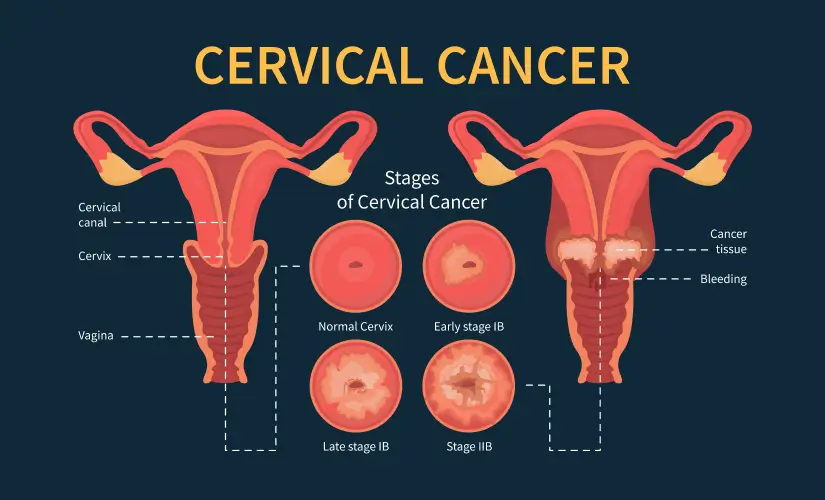
A note from Dr. Sujata Mittal, Senior Gynaecologist, Preventive Oncologist and Colposcopist — Famicare Speciality Centre, Sector 7, Rohini, New Delhi Every woman who walks into our clinic with a cervical biopsy report asks some version of the same question: "Will I be alright?" She rarely asks how long the incision will be, or whether the surgery will be done through a keyhole or an open cut. Yet for nearly two decades, that was the question the surgical world argued about — and, as it turned out, we were arguing about the wrong thing.

At Famicare, we have organised our entire cervical cancer practice around one number: the disease-free interval. Not the length of the scar. Not the number of days in hospital. Not how modern the equipment looks. When I accept a patient for cancer surgery, I am selecting for a realistic prospect of "ten or more years free of disease". If I cannot see a path to that, I say so, and I refer or re-plan. That is the whole philosophy, stated plainly.
- andgivekehw
1. The laparoscopy question: what the evidence actually showed
For years, minimally invasive radical hysterectomy — laparoscopic or robotic — was assumed to be as good oncologically as open surgery, with the bonus of less pain, less blood loss and a faster discharge. Retrospective series supported this. Guidelines permitted it. In many centres it became the default. Then the randomised data arrived, and it was sobering.
- The LACC trial (New England Journal of Medicine, 2018; final analysis, Journal of Clinical Oncology, 2024).* This international phase 3 trial randomised 631 women with early-stage cervical cancer to minimally invasive or open radical hysterectomy. It was stopped early by the data monitoring committee because of excess deaths in the keyhole arm. At 4.5 years, disease-free survival was roughly 85–86% after minimally invasive surgery versus about 96% after open surgery. Overall survival was 90.6% versus 96.2%. The final analysis, with every patient followed to 4.5 years, did not soften the picture — it confirmed it. Strikingly, carcinomatosis — disease seeded through the peritoneal cavity — was far more common after the minimally invasive approach, which points to tumour spillage during surgery rather than to bad luck.The Melamed study (New England Journal of Medicine, 2018).* Published alongside LACC, this analysis of the US National Cancer Database found 4-year mortality of 9.1% after minimally invasive radical hysterectomy versus 5.3% after open surgery — a 65% higher risk of death. A second, population-level analysis showed something even more disturbing: after 2006, as keyhole radical hysterectomy was adopted across the United States, the national 4-year relative survival for cervical cancer began falling by about 0.8% per year, having been flat for the six years before that. An entire country's survival curve bent downwards in step with a surgical fashion.The SUCCOR study (International Journal of Gynecological Cancer, 2020). A European cohort across 126 institutions in 29 countries, examining stage IB1 disease, again found higher relapse and death rates with the minimally invasive approach. Importantly, SUCCOR looked at why, and identified two culprits: the uterine manipulator, and "unprotected colpotomy" — opening the vagina while the tumour-bearing cervix is exposed to the abdominal cavity.The meta-analysis (JAMA Oncology, 2020).* Fifteen observational studies, 9,499 women, methodologically selected to minimise confounding. Same direction of harm.
- The mechanism is not mysterious. A manipulator sits inside a tumour-bearing cervix and pushes on it for two hours. The vagina is cut open under gas pressure. Carbon dioxide circulates. Tumour cells get a ride they would never have got through an open incision. The patient goes home on day two feeling wonderful — and returns in year three with pelvic carcinomatosis.Our position at Famicare is unambiguous:* for radical hysterectomy in invasive cervical cancer, we do not trade survival for cosmesis. Open surgery, no manipulator in a cancer-bearing cervix, protected colpotomy, meticulous parametrial and nodal clearance. NCCN and ESGO reached the same conclusion after LACC. Laparoscopy remains a superb tool in my hands for benign disease and for selected non-cervical indications — but a smaller scar is not a therapeutic benefit if it costs a decade of life.
2. De-escalation done properly — less surgery, not less cure
The other half of the story is that for the right woman, we are now doing *less* radical surgery, and doing it safely. The SHAPE trial (New England Journal of Medicine, 2024) randomised 700 women with genuinely low-risk, early-stage disease — tumours 2 cm or smaller, with limited stromal invasion — to simple hysterectomy with pelvic node assessment versus radical hysterectomy. Three-year pelvic recurrence was 2.52% after simple hysterectomy and 2.17% after radical surgery: non-inferior. Urological complications — ureteric and bladder injury, retention, incontinence — were significantly fewer with the simple operation. That result is only as good as the selection that precedes it. Tumour size on conisation and MRI, depth of stromal invasion, lymphovascular invasion, margin status, nodal assessment — every one of these must be nailed down before the decision, not discovered afterwards. This is precisely where careful pre-operative work-up earns its keep, and where a rushed decision costs the patient her radicality margin. Alongside this sit "sentinel lymph node mapping, which spares many women a full pelvic lymphadenectomy and its lymphoedema, and "fertility-sparing radical trachelectomy" for carefully chosen young women with small tumours who have not completed their families. "One decision we take very seriously: avoiding double treatment" A woman who undergoes radical hysterectomy and then needs adjuvant chemoradiation for positive nodes or margins carries the morbidity of both — and gains nothing in survival over primary chemoradiation. If imaging and pathology suggest she will need radiation anyway, the honest counsel is to go straight to definitive chemoradiation. Deciding this before the incision, not after, is one of the quiet ways outcomes are protected.
- 3. Locally advanced disease: where discipline decides survivalFor stage IB3 and above, surgery is not the answer. Concurrent chemoradiation is, and three things determine whether it cures:
- - *Brachytherapy is non-negotiable.* External beam radiation alone will not sterilise a cervical tumour. The *EMBRACE-I* study of MRI-based image-guided adaptive brachytherapy reported over 90% five-year local control across all stages — an extraordinary result, achieved by adapting the dose to the tumour as it shrinks and sparing bladder, rectum and sigmoid.
- - *Overall treatment time matters.* Prolonging a radiation course beyond about eight weeks allows tumour repopulation. Interruptions for anaemia, low counts, fever, transport failures, and family logistics are not administrative details — they are survival variables. We plan around them from day one.
- - *Systemic intensification, in the right patient.* The *INTERLACE* trial showed that six weeks of induction carboplatin–paclitaxel before chemoradiation improved five-year progression-free survival (72% vs 64%) and overall survival (80% vs 72%). The *KEYNOTE-A18* trial showed that adding pembrolizumab to chemoradiation in high-risk locally advanced disease improved three-year overall survival to 82.6% from 74.8%. For recurrent or metastatic disease, *KEYNOTE-826* established immunotherapy plus chemotherapy, and antibody–drug conjugates such as tisotumab vedotin, with trastuzumab deruxtecan in HER2-expressing tumours, have extended options beyond what existed five years ago.
- These are real advances. They are also expensive, and access in India is uneven. Part of our job is to tell a family honestly which of these will change their outcome and which will only change their bill.
4. The other half of the outcome: nutrition, mind–body and immunity

Here is what oncology charts rarely record, and what we at Famicare track obsessively. A woman with a serum albumin of 2.8 g/dL and a haemoglobin of 8 g/dL does not tolerate chemoradiation. She misses cycles. Her radiation gets interrupted. She loses muscle mass she cannot rebuild. Low albumin, low haemoglobin and sarcopenia are repeatedly associated with poorer outcomes in cervical and other solid cancers — not as alternative theories, but as measurable, correctable clinical variables. Correcting them is not "complementary medicine"; it is competent oncology that too often goes undone. So, in every cervical cancer patient we take on: - *Nutrition is prescribed like a drug.* Baseline albumin, haemoglobin, iron studies, vitamin D, B12, thyroid and glycaemic status. A protein target in grams, not vague advice to "eat well". Iron or transfusion before, not during, a radiation break. Reassessment at every cycle. - *Muscle is protected.* Loss of lean mass during treatment predicts poor outcomes. Simple resistance work and daily walking, scaled to what she can manage, from the first week. - *The mind–body complex is treated as clinical.* Sleep, circadian regularity, breath work, yoga nidra, and structured counselling for the fear that follows a cancer diagnosis. Distress that goes unaddressed shows up as missed appointments and abandoned treatment — the commonest cause of failure in Indian practice. - *Immunity and inflammation are monitored,* through neutrophil–lymphocyte ratio, glycaemic control, weight trajectory and infection prevention, so that treatment is delivered on schedule and at full dose. - *Surveillance is structured, not sentimental.* A defined follow-up schedule with examination, cytology or HPV testing where appropriate, and imaging on indication — because a recurrence found early in the vaginal vault is a salvageable problem, and one found late is not. Let me be precise about what this is and is not. *None of this replaces surgery, chemotherapy or radiotherapy.* Nutrition does not shrink a tumour. What it does — reliably, measurably — is allow the definitive treatment to be delivered completely, on time, at full dose, in a woman strong enough to recover from it. That is where the extra years come from.
5. Prevention: screening is where the battle is actually won

Cervical cancer takes 10 to 15 years to develop from a persistent infection through CIN to invasion. That is an enormous window, and India largely fails to use it. What works, and what we offer: - *Screening from the age of 30* (earlier where risk factors exist), with cytology and/or HPV testing at defined intervals. - *Colposcopy done properly* by someone trained to do it — the single most under-supplied skill in Indian gynaecology. An abnormal Pap that is never followed by an adequate colposcopy and directed biopsy is a screening test wasted. - *Correct treatment of CIN,* with adequate excision, margin assessment and disciplined post-treatment follow-up. Recurrence after LEEP is common enough that "treated and forgotten" is a dangerous phrase. - *Investigation of every unexplained bleed* — post-coital, intermenstrual, or post-menopausal. Not one of these deserves an empirical prescription and a three-month wait. I run a colposcopy training programme precisely because this is where the shortfall lies. A district with a working colposcopy service and a pathologist prevents more cervical cancer deaths than any amount of downstream heroics.
Our commitment, stated plainly
We choose our patients carefully. We tell women honestly when we are the right centre for them and when they should be at a comprehensive cancer centre with an on-site linear accelerator and brachytherapy suite. We do not perform keyhole radical hysterectomy for cervical cancer. We plan for a decade of disease-free life, and we build every decision — surgical approach, sequencing, nutrition, follow-up — backwards from that goal. If you have an abnormal Pap or HPV report, a suspicious cervix, a recent biopsy, or a cervical cancer diagnosis and want a second opinion on the treatment plan, we are glad to review it with you. *Famicare Speciality Centre, Sector 7, Rohini, New Delhi — *+91 77039 49742** --- This article is intended for general education and does not constitute individual medical advice. Treatment decisions in cervical cancer depend on stage, histology, imaging, pathology and individual circumstances, and must be made with your treating team. Outcomes vary between individuals; no centre can guarantee a specific disease-free interval.
- Key references
- 1. Ramirez PT, et al. Minimally invasive versus abdominal radical hysterectomy for cervical cancer. N Engl J Med 2018;379:1895–1904. https://www.nejm.org/doi/full/10.1056/NEJMoa1806395
- 2. Ramirez PT, et al. LACC Trial: final analysis on overall survival. J Clin Oncol 2024;42:2741–2746. https://pubmed.ncbi.nlm.nih.gov/38810208/
- 3. Melamed A, et al. Survival after minimally invasive radical hysterectomy for early-stage cervical cancer. N Engl J Med 2018;379:1905–1914. https://pmc.ncbi.nlm.nih.gov/articles/6464372/
- 4. Nitecki R, et al. Survival after minimally invasive vs open radical hysterectomy: a systematic review and meta-analysis. JAMA Oncol 2020;6:1019–1027. https://pmc.ncbi.nlm.nih.gov/articles/PMC7290695
- 5. Chiva L, et al. SUCCOR study: minimally invasive versus open abdominal radical hysterectomy in stage IB1 cervical cancer. Int J Gynecol Cancer 2020;30:1269–1277. https://pubmed.ncbi.nlm.nih.gov/32788262/
- 6. Plante M, et al. Simple versus radical hysterectomy in women with low-risk cervical cancer (SHAPE/CX.5). N Engl J Med 2024;390:819–829. https://www.nejm.org/doi/full/10.1056/NEJMoa2308900
- 7. McCormack M, et al. Induction chemotherapy followed by chemoradiotherapy in locally advanced cervical cancer (GCIG INTERLACE). Lancet 2024. https://www.thelancet.com/journals/lancet/article/PIIS0140-6736(24)01438-7/fulltext
- 8. Lorusso D, et al. Pembrolizumab plus chemoradiotherapy in high-risk locally advanced cervical cancer (ENGOT-cx11/GOG-3047/KEYNOTE-A18). Lancet 2024;403:1341–1350.
- 9. Pötter R, et al. MRI-guided adaptive brachytherapy in locally advanced cervical cancer (EMBRACE-I). Lancet Oncol 2021 — five-year local control above 90% across stages.
- 10. Effect of albumin and haemoglobin levels on prognosis in early-stage cervical cancer. https://www.ncbi.nlm.nih.gov/pmc/articles/PMC10598933/
Frequently Asked Questions
1. Is open surgery better than laparoscopic surgery for cervical cancer?
For radical hysterectomy in invasive cervical cancer, clinical trials have shown better disease-free and overall survival with open surgery than with minimally invasive surgery in appropriately selected patients.
4. Can every woman with early-stage cervical cancer have a simple hysterectomy?
No. Simple hysterectomy may be appropriate only for carefully selected low-risk tumours, based on tumour size, depth of invasion, lymphovascular invasion, margins and lymph-node assessment.
6. What is sentinel lymph-node mapping?
Sentinel lymph-node mapping identifies the first lymph nodes likely to contain cancer cells. It may help selected patients avoid complete pelvic lymph-node removal and reduce the risk of lymphoedema.
connect with us Now!
Keep reading
View all → Cancer Awareness
CERVAVAC: Evidence, WHO Prequalification & Vaccine Policy
India’s first indigenous HPV vaccine, CERVAVAC, receiving WHO prequalification marks an important milestone in preventive oncology.
 Cancer Awareness
Breast Cancer & Liquid Biopsy in Rohini, Delhi
Breast cancer is not always limited to the breast. Cancer cells can spread through the blood and lymphatic system, making systemic treatment essential for reducing the risk of recu…
 Cancer Awareness
Targeted Therapy for Breast Cancer: Latest Treatments
Targeted therapy for breast cancer is a modern treatment approach that focuses on specific proteins, genes, or molecular changes that help cancer cells grow and spread.