
Dermal Absorption in Cancer Care: Why Shower Water Quality Matters During Treatment
While oncology discussions typically focus on diet and internal side effects, one critical environmental pathway is often overlooked: transdermal toxin absorption through daily shower water.
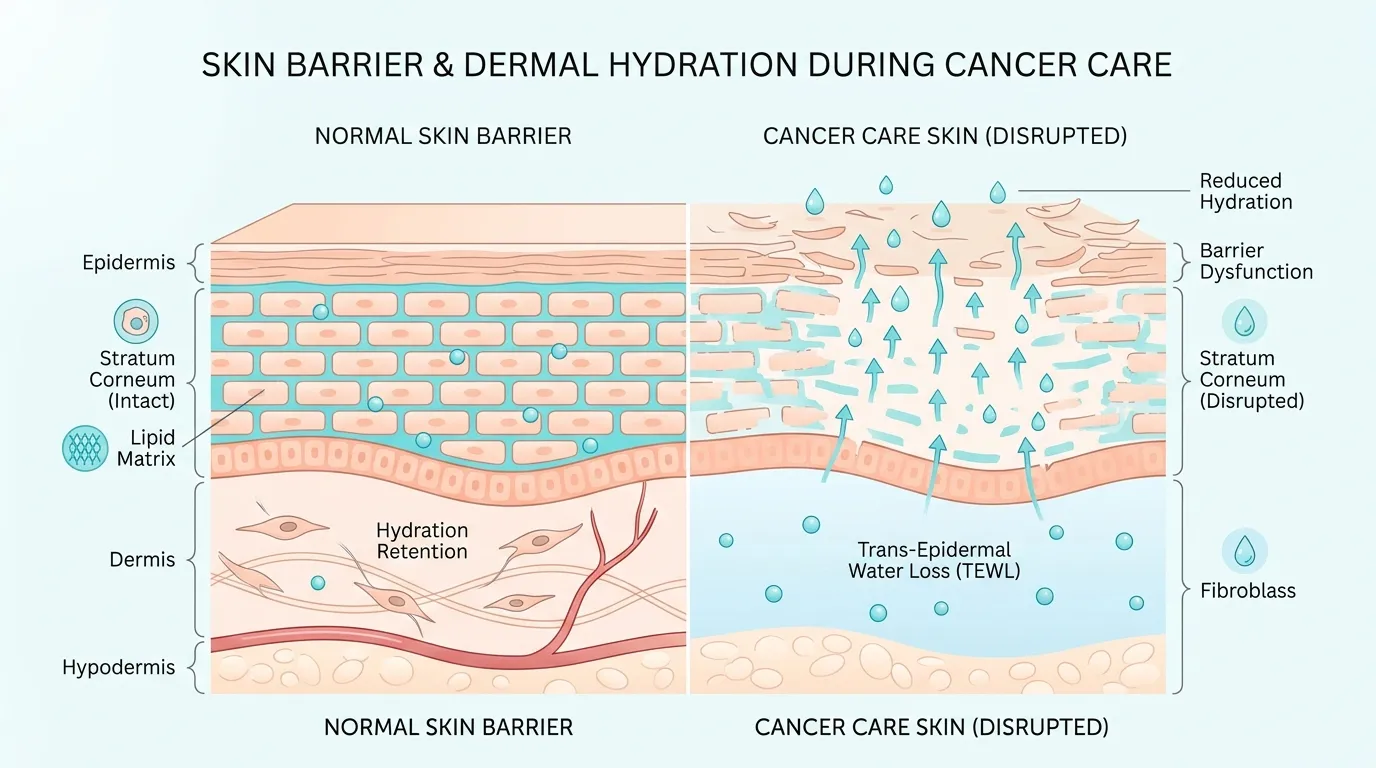
The human body undergoes profound physiological changes during cancer treatment. While medical discussions surrounding chemotherapy, radiation, and immunotherapy typically center on internal side effects and dietary precautions, one critical environmental pathway is frequently overlooked: dermal absorption through daily shower water. Because cancer therapies can significantly weaken the body's immune response and compromise the skin barrier, taking proactive steps to minimize daily toxin exposure is an essential component of integrative care and recovery.
The Skin: The Body’s Largest Organ and Vulnerable Barrier
The skin is not merely a protective wrapper; it is the human body's largest organ, accounting for roughly 16% of total body mass. It is a dynamic, complex tissue that performs critical functions in detoxification, temperature regulation, and immune defense. However, the skin is inherently permeable. Through transdermal absorption, lipophilic (fat-soluble) chemicals, environmental pollutants, and heavy metals can bypass the digestive tract—which normally utilizes liver filtration and stomach acid as protective checkpoints—and pass directly into the bloodstream and lymphatic system.
Why Skin Barrier Function Drops During Cancer Treatment
Cancer therapies, including chemotherapy, targeted agents, and radiation therapy, frequently cause significant dermatological side effects:
- Dryness, thinning, and cracking (Xerosis): Treatments disrupt the epidermal stratum corneum, diminishing the lipid barrier that prevents chemical uptake.
- Radiation Dermatitis: Irradiated skin becomes inflamed, fragile, and hyper-permeable.
- Mucositis and Open Lesions: Micro-fissures and rashes provide direct pathways for waterborne contaminants to enter systemic circulation.
How Hot Showers Accelerate Toxic Uptake
When contaminated water hits compromised, warm skin during a hot shower, two main pathways increase toxic uptake:
- Direct Dermal Absorption: Warm water expands blood vessels and opens pores, accelerating transdermal diffusion.
- Inhalation of Volatile Compounds: Hot steam turns volatile organic compounds (VOCs) into an aerosol, allowing harmful chemicals to be inhaled directly into the lungs and absorbed rapidly into the bloodstream.
Common Environmental Toxins in Unfiltered Water & Protective Steps
Municipal and tap water supplies often contain trace levels of industrial chemicals, chlorine byproducts, microplastics, and heavy metals that can burden a patient's already strained biological systems.
- Install a High-Grade Shower Filter: Multi-stage filters containing KDF-55 and activated carbon significantly reduce chlorine, heavy metals, and vaporized VOCs.
- Keep Showers Lukewarm: Avoid excessively hot water, which strips natural lipids and causes vasodilation that enhances chemical penetration.
- Limit Shower Duration: Keep showers between 5 to 10 minutes to minimize prolonged steam inhalation.
- Moisturize Immediately: Apply fragrance-free, oncologist-approved emollient creams within 3 minutes of stepping out to seal the epidermal barrier.
Dr. Sujata Mittal, Senior Gynaecologic Oncologist & Founder, Famicare Speciality Centre, Rohini, New Delhi
Frequently Asked Questions
Why is shower water more hazardous than drinking unfiltered water?
Inhaled shower steam and transdermal absorption bypass the liver and digestive filtration, delivering airborne chlorine and VOCs directly into the bloodstream and lungs.
What type of shower filter is best during cancer therapy?
Look for multi-stage filters that combine KDF-55 (kinetic degradation fluxion) media with catalytic activated carbon to trap chlorine, chloramines, and heavy metals.
Have questions about skin care and environmental wellness during oncology care? Consult our specialists today.
Keep reading
View all → Preventive Oncology
The Control Panel of Your DNA: How Your Lifestyle Rewrites Your Health
Your DNA is the permanent hardware, but epigenetics provides the software bookmarks. Discover how daily habits can activate tumor suppressor genes and rewrite your health blueprint.
 Cancer Awareness
Demystifying Cancer Jargon: A Plain-English Guide to 8 Essential Terms
Hearing words like angiogenesis, apoptosis, or HER2 can feel overwhelming. Here is an empowering translation of eight essential oncology terms using simple everyday analogies.
 Regenerative Medicine
Beyond Waste: The Untapped Regenerative Power of Menstrual Blood
What was once dismissed as waste is now proving to be one of the richest, most ethical, and most accessible sources of regenerative medicine available: Menstrual Stem Cells (MenSCs).