
Minimally Invasive vs. Open Surgery: What Really Changes for You
Smaller cuts sound better · but not every cancer is a candidate. Here is how surgeons actually decide.

Minimally invasive surgery (MIS) · laparoscopic and hand-assisted techniques · has transformed gynaecologic oncology over the last 20 years. But it is not always the right choice. This honest comparison, written by Dr. Sujata Mittal · a gynaecologic oncology surgeon with more than 5,000 pelvic procedures across both minimally invasive and open approaches · helps you understand exactly what changes for the patient, and when open surgery is genuinely the safer, better option.
What Minimally Invasive Surgery Actually Offers
- 3-4 small incisions of 5-10 mm instead of a long midline scar
- Average blood loss under 100 ml (versus 400-800 ml in open surgery)
- Hospital stay of 2-3 days instead of 6-8 days
- Return to normal light activity in 2-3 weeks instead of 6-8
- Lower rates of wound infection, incisional hernia and adhesions
- Excellent long-term cosmetic result
When Open Surgery Is Still the Better Choice
Very large tumours (typically over 10-12 cm), extensive intra-abdominal disease spread, distorted anatomy from prior surgery or radiation, severe adhesions, dense obesity that limits laparoscopic access, and emergency bleeding all favour an open approach. In ovarian cancer specifically, the gold-standard cytoreductive (debulking) surgery is best performed open because completeness of tumour removal · not the size of the scar · is the strongest predictor of long-term survival. Choosing MIS in the wrong scenario risks incomplete resection · and that is medically unacceptable.
How the Decision Is Actually Made at Famicare
Every complex case is discussed at a multidisciplinary tumour board · surgeon, medical oncologist, radiologist, pathologist and, when relevant, radiation oncologist. Imaging, biopsy, tumour markers and patient factors are all weighed together. The recommendation · MIS, open, or a hybrid approach · is written down, explained to the patient and family in plain language, and never rushed. Patients are given time to ask questions and, if they wish, to seek a second opinion.
Why Surgeon Experience Matters More Than the Approach
There is no such thing as a better technique independent of the surgeon performing it. Minimally invasive gynaecologic oncology surgery has a steep learning curve · outcomes for surgeons who have done fewer than 100 cases differ dramatically from those who have done 1,000+. Dr. Sujata Mittal has performed thousands of both open and minimally invasive gynaecologic cancer surgeries, and Famicare's outcomes · complication rates, readmission rates, oncological completeness · are benchmarked against international standards and reported transparently to referring physicians.
Recovery · What Genuinely Differs
After MIS, most patients are eating a light diet within 12 hours, walking freely within 24 hours, and discharged on day 2. After open surgery, the same milestones typically fall 2-3 days later. But by 3 months post-surgery, oncological outcomes and quality of life converge for both groups. The right question is not which is faster but which gives you the best chance of long-term cure while keeping recovery as smooth as possible · and only a surgeon experienced in both can answer that honestly for your case.
Frequently Asked Questions
Is minimally invasive surgery always better?
No. For most benign disease and early-stage cancers · yes. For advanced ovarian cancer, very large tumours, or extensive disease spread · open surgery is often the correct oncological choice.
Does the small scar mean less cancer is removed?
When done by an experienced gynaecologic oncologist in the right patient, no · the same tissue is removed. The difference is only in access, not in what leaves the body.
How do I know which approach is right for me?
Ask your surgeon three questions: How many of these operations have you done in the last year? What is your personal complication rate? And · crucially · which approach gives me the best oncological outcome, not just the easiest recovery?
Is minimally invasive surgery more expensive?
Instrument costs are higher, but shorter hospital stays and faster return to work often make total cost of care similar or lower. Famicare provides transparent, itemised estimates before every procedure.
What is Dr. Sujata Mittal's experience with both approaches?
Over 5,000 gynaecologic tumour surgeries across three decades, including advanced laparoscopic radical hysterectomy, laparoscopic staging for endometrial and early ovarian cancer, and complex open cytoreductive surgery for advanced disease.
Considering surgery? Get an honest, second-opinion assessment from Dr. Sujata Mittal · minimally invasive when appropriate, open when it is safer.
Keep reading
View all →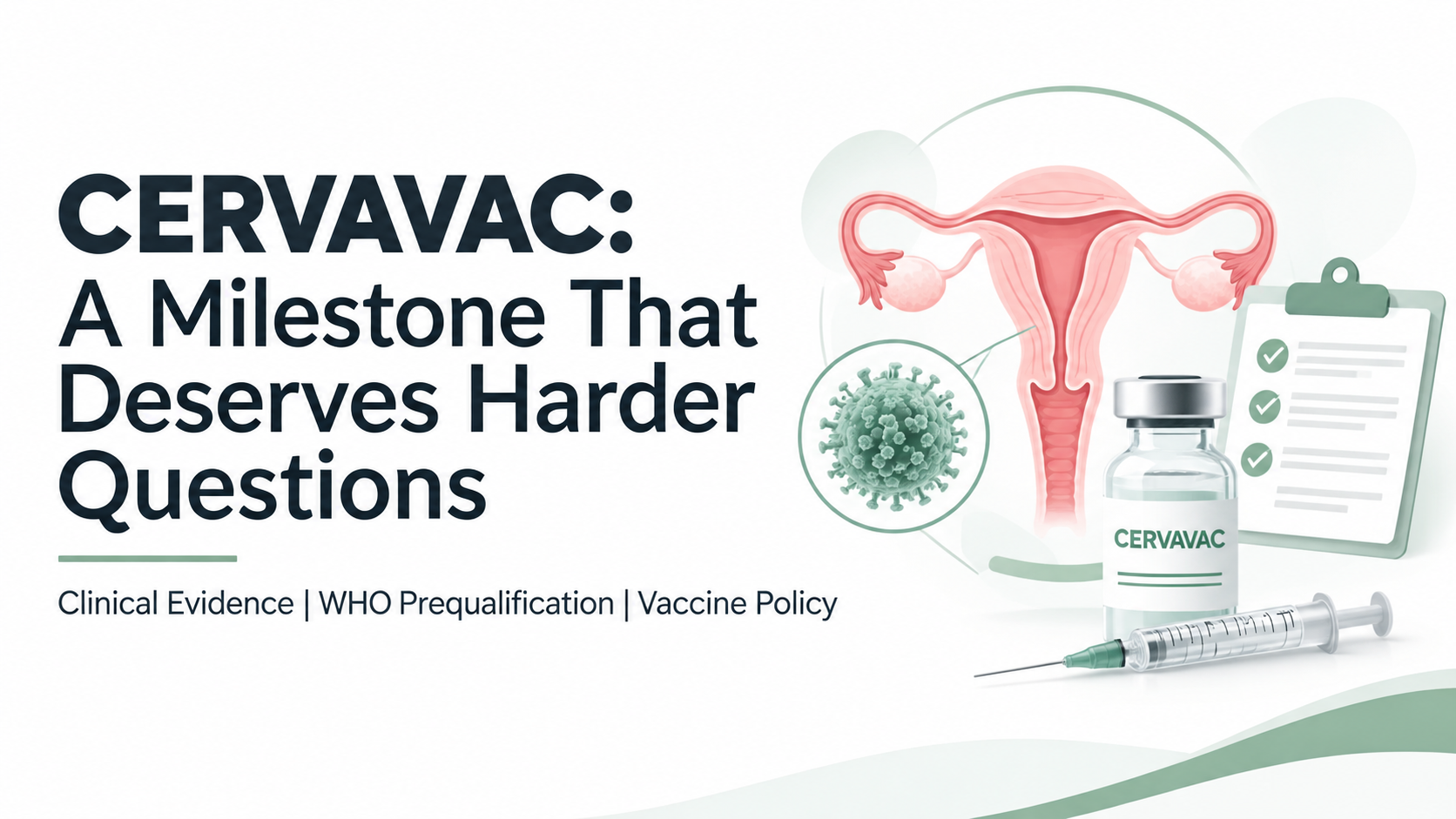 Cancer Awareness
CERVAVAC: Evidence, WHO Prequalification & Vaccine Policy
India’s first indigenous HPV vaccine, CERVAVAC, receiving WHO prequalification marks an important milestone in preventive oncology.
 Cancer Awareness
Breast Cancer & Liquid Biopsy in Rohini, Delhi
Breast cancer is not always limited to the breast. Cancer cells can spread through the blood and lymphatic system, making systemic treatment essential for reducing the risk of recu…
 Cancer Awareness
Targeted Therapy for Breast Cancer: Latest Treatments
Targeted therapy for breast cancer is a modern treatment approach that focuses on specific proteins, genes, or molecular changes that help cancer cells grow and spread.