
🔬 When Technology Becomes a Distraction: The Robotic Surgery Paradox in India

The Ground Reality Nobody Is Talking About

While our premier hospitals in Mumbai, Delhi, and Bengaluru invest ₹10–15 crore per robotic system, 70% of India's population living in villages does not have reliable access to even basic surgical care. Let that sink in. Community Health Centres (CHCs) — the closest approximation of a hospital for rural Indians — report an 83% vacancy rate for surgeons and 76% vacancy for obstetricians and gynecologists. The doctor-patient ratio in India stands at approximately 1:1456, well below the WHO-recommended 1:1000, and far worse in rural areas. We have 6.25 lakh newborns dying every year. We have a Maternal Mortality Rate that still haunts us. We have villages where a pregnant woman travels over 100 km to reach a functional health facility — sometimes in a tractor. In this context, robotic surgery is not a healthcare solution. It is a healthcare spectacle.
The Hidden Complication Nobody Reports
Here is a surgical truth that does not make it to press releases: A surgeon trained exclusively on laparoscopic or robotic platforms is not necessarily a complete surgeon. Open surgery is not a "fallback." It is the foundation. It is the skill that saves lives when anatomy is distorted, bleeding is uncontrolled, or technology fails mid-procedure. A published analysis in the Indian Journal of Urology noted: "Contrary to the West where there is a strict quality control in place by keeping a tab on readmissions, prolonged stay, and re-exploration rates for every surgeon, Indian hospitals do not have such robust checks and balances." Another peer-reviewed paper on robotic surgery in India observed: "There is growing evidence that complications of robotic surgery are under-reported, as is the incidence of irrevocable operative malfunctioning during the procedure. Conversion to laparoscopic or open surgery in case of difficulty is laborious and time-consuming and could be life-threatening in a dire emergency." Global FDA data shows that among adverse robotic surgery events, 75.9% were device malfunctions, and voluntary reporting databases are acknowledged to significantly under-report real numbers. In India, where no equivalent mandatory reporting system exists, we are operating in the dark. Studies on laparoscopic cholecystectomy in India show conversion to open surgery is required in 1–13% of cases, driven by uncontrolled bleeding, dense adhesions, or unclear anatomy. When conversion becomes necessary and the surgeon lacks confident open surgical skills, the outcome is not a statistic. It is a family's tragedy.
The Cost Equation That Doesn't Add Up

One da Vinci robotic system costs ₹12–16 crore to install and ₹3–4 crore annually to maintain. Disposable instruments and drapes add to every single procedure. Systematic reviews and meta-analyses comparing robotic surgery to conventional surgery have failed to show superiority in clinical outcomes. The result is often "comparable" — a word that, when attached to a cost 5–10 times higher, deserves careful consideration. Meanwhile, 34% of rural households have no health insurance coverage, and 70–80% of healthcare expenses are paid out-of-pocket. We are pursuing comparable outcomes at significantly higher costs while a large proportion of the population still struggles to access basic surgical care.
What We Actually Need
I am not against technology. I am against technology replacing foundational surgical competence and against the misallocation of limited healthcare resources. What India needs is: More trained open surgeons deployed to Community Health Centres and district hospitals Mandatory open surgical competency before advanced laparoscopic or robotic training Transparent complication reporting for minimally invasive procedures Greater investment in public healthcare infrastructure and surgical services The scalpel is not outdated. The surgeon who has mastered it is not obsolete. The ability to perform life-saving open surgery when technology cannot is an irreplaceable skill.
A Final Word to My Colleagues

Medical tourism is real. If India aims to attract patients from around the world for advanced robotic procedures, that is a legitimate healthcare objective. However, medical tourism infrastructure and public health infrastructure serve different purposes and should not be viewed as interchangeable. Technology without strong surgical foundations can never replace sound clinical judgment. Healthcare progress must be measured not only by innovation but also by accessibility, equity, patient safety, and the ability to deliver quality care to every patient.
Stay Connected with Famicare Speciality Center
Famicare Speciality Center regularly shares evidence-based healthcare insights, surgical education, cancer awareness, women's health information, and updates on important medical topics to help patients and healthcare professionals stay informed. Follow Famicare Speciality Center for trusted healthcare knowledge and expert medical updates.
- 📧 Email: famicarespeciality08@gmail.com
- 🌐 Website: https://famicarespeciality.com
- 📸 Instagram: https://www.instagram.com/famicarespecialitycenter/
📞 For consultations or queries, contact us: +91 96253 61613
Keep reading
View all →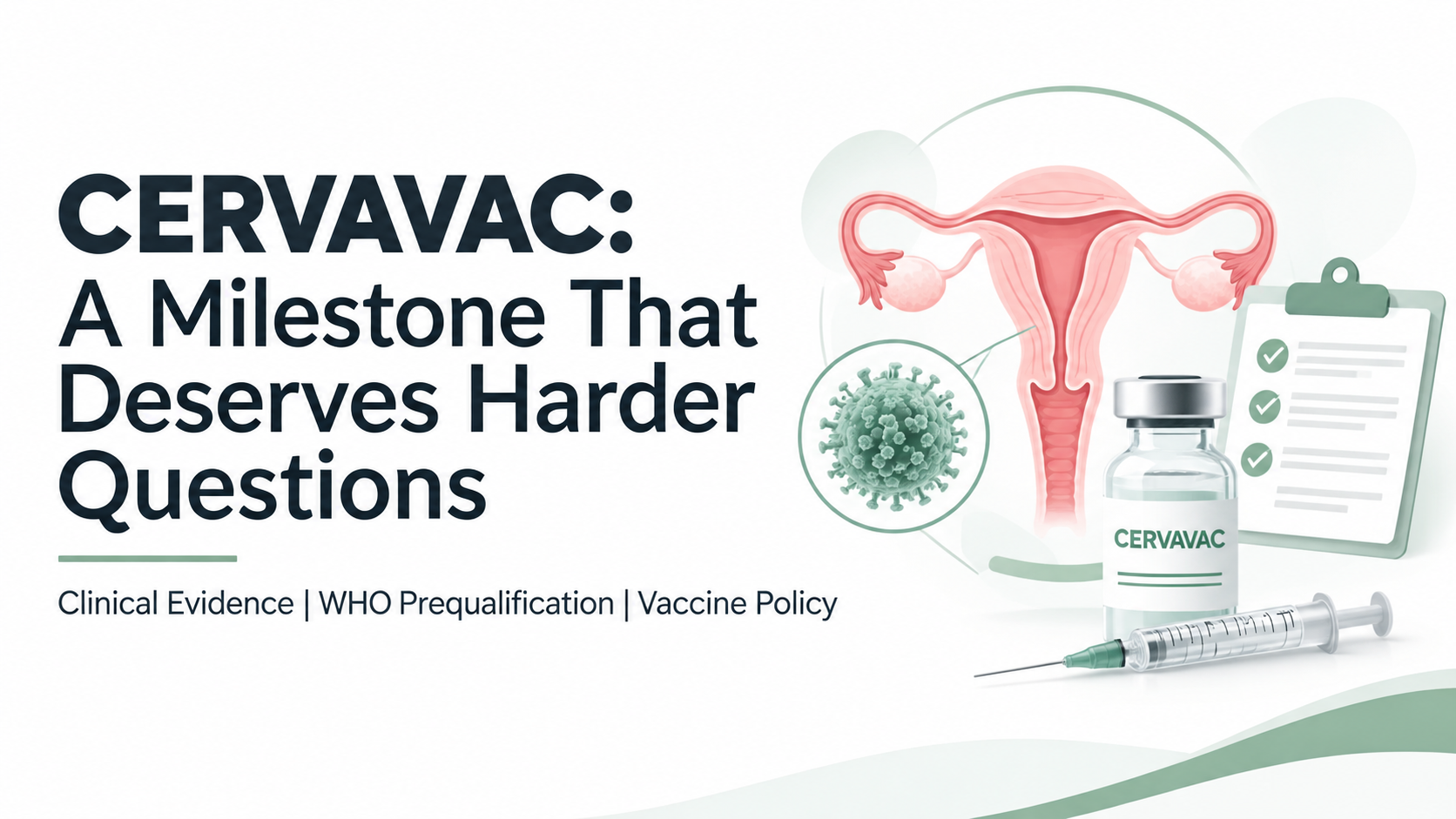 Cancer Awareness
CERVAVAC: Evidence, WHO Prequalification & Vaccine Policy
India’s first indigenous HPV vaccine, CERVAVAC, receiving WHO prequalification marks an important milestone in preventive oncology.
 Cancer Awareness
Breast Cancer & Liquid Biopsy in Rohini, Delhi
Breast cancer is not always limited to the breast. Cancer cells can spread through the blood and lymphatic system, making systemic treatment essential for reducing the risk of recu…
 Cancer Awareness
Targeted Therapy for Breast Cancer: Latest Treatments
Targeted therapy for breast cancer is a modern treatment approach that focuses on specific proteins, genes, or molecular changes that help cancer cells grow and spread.